Make your comprehensive eye exams a family affair by requesting appointments together and encouraging your loved ones to prioritize their eye health.
Prioritize Family Health with Comprehensive Eye Exams
Book An Appointment
Questions About Your Booking?
Common Exam FAQs
During your comprehensive eye exam, your optometrist checks your vision and eye health. We’ll test how clearly you see, evaluate your prescription, and screen for common conditions like glaucoma, cataracts, and macular degeneration.
Most exams take about 30 to 45 minutes, depending on your needs. If it’s your first visit or you have a medical eye condition, your exam may take a little longer so we can run extra tests and answer all your questions.
In most cases, yes, you can drive yourself after your appointment. However, if your eyes are dilated, you may notice some temporary light sensitivity or blurred vision for a few hours. If dilation is part of your exam, we’ll let you know in advance.
Eye exams are often covered by either your vision or medical insurance, depending on the reason for your visit.
Why Do You Need an Eye Exam?
Eye exams are a critical part of your healthcare. Many serious eye conditions develop with no obvious symptoms and can go unnoticed until they’ve already caused damage. Regular eye exams allow us to detect and manage issues early, when treatment is most effective. Depending on your age and risk factors, an exam can help:
Exams for Every Age & Need
We don’t believe in one-size-fits-all exams because your eyes, your health, and your lifestyle deserve more. Here’s how we tailor eye care for every stage of life:
Pediatric Eye Exams
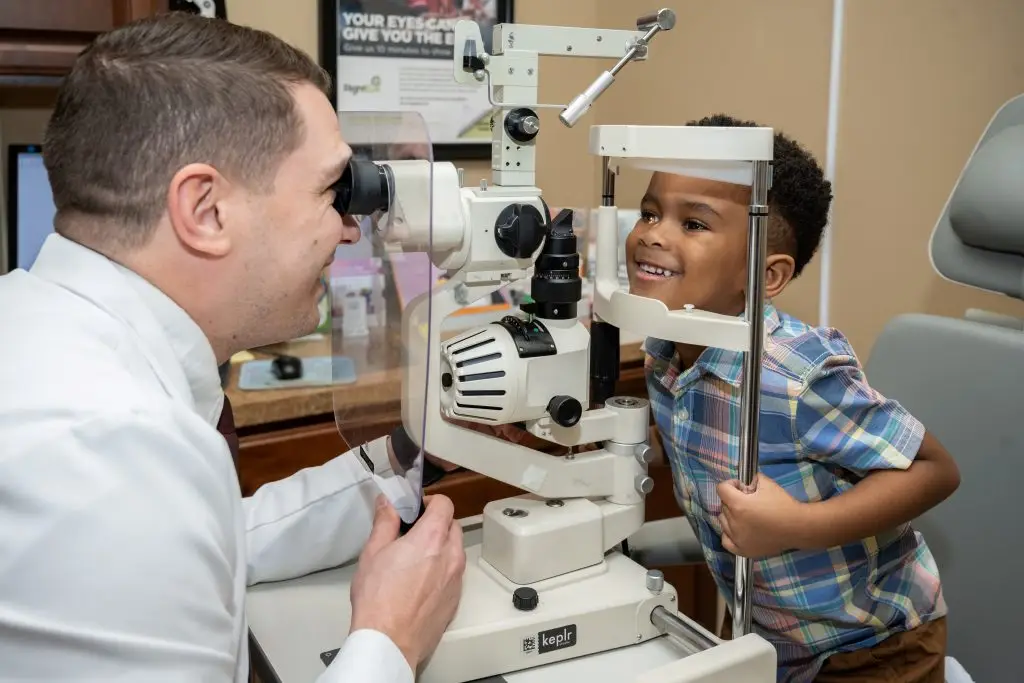
Children's eyes change quickly. We offer age-appropriate exams to monitor visual development, check for conditions like amblyopia (lazy eye) and strabismus (eye turn), and make sure your child sees clearly. Our pediatric care focuses on building confidence and strong habits from the start.
School Vision Screenings
A quick vision screening at school isn’t enough. We provide thorough pre-- and post-school-year exams that assess how well your child’s eyes are functioning. From reading strain to tracking issues, we make sure their vision isn't holding them back.
Routine Eye Exams
Even if your vision feels “fine,” small changes can go unnoticed. Our adult exams screen for vision clarity, eye health, digital eye strain, and common conditions like astigmatism or early dry eye.
Senior Eye Exams
As we age, the risk of conditions like cataracts, macular degeneration, and glaucoma increases. We offer senior-friendly exams focused on preserving your vision and independence, with clear next steps if anything needs attention.
Diabetic Eye Exams
Diabetes can cause hidden damage to the eyes. We provide detailed diabetic eye exams to check for early signs of retinopathy, swelling, or blood vessel changes. We coordinate with your primary care provider to support your overall health.
Eye Exams Are Important For All Ages
Eye exams are crucial, regardless of age or physical condition. In a holistic eye examination, our eye doctors not only gauge your eyeglass or contact lens prescription but also screen for common eye ailments, evaluate visual skills, and gain insights into your overall well-being.

How Often Should I Visit My Eye Doctor as I Age?
The American Optometric Association (AOA) recommends an annual eye exam for eyeglass or contact lens wearers. A yearly eye check-up remains imperative even if you don't typically require vision correction. We often suggest enhanced frequency for individuals managing diabetes, high blood pressure, and similar conditions due to their influence on vision and eye well-being.
For those aged 40 and above, a biennial to annual eye assessment is prudent, highlighting potential age-associated concerns like presbyopia, cataracts, and macular degeneration.
Individuals over 60 should opt for annual examinations, considering escalating susceptibility with age.
Eye Exams for Young Eyes
Statistics hint that around 5% to 10% of preschoolers and 25% of school-age children face vision issues. The American Optometric Association (AOA) states that all children must undergo eye examinations at six months, age three, and upon school entry. Children without vision issues or risk factors should continue annual assessments throughout their schooling years.
Children with existing vision issues or risk factors warrant more frequent checks. Common risk factors entail:
- Premature birth
- Developmental delays
- Strabismus or amblyopia
- Family history of eye disease
- History of eye injury
- Other health conditions

The AOA recommends that eyeglass or contact lens-wearing children undergo eye exams every 12 months or as directed by their optometrist.
Discover the Wonders of InfantSEE in Acworth
The InfantSEE initiative is invaluable for many parents, championing the vision and developmental well-being of infants aged six to 12 months. In your little one's formative stages of growth, thorough ocular evaluations play a pivotal role in revealing potential concerns that could impact their visual journey.
Through InfantSEE, we extend no-cost assessments of your infant's eye health, focusing abilities, and alignment.
What to Expect During an Eye Exam
Visual Field Test
This test gauges your peripheral vision to identify blind spots or any irregularities. It makes it easy to check how well you can see objects and movement outside your direct line of sight.
Refraction Exam
Experience the world with unparalleled clarity through the refraction exam. This test determines the optimal prescription for your glasses or contact lenses using a state-of-the-art phoropter equipped with various lenses.
Binocular Vision Check
Using advanced techniques, we can check your eyes' alignment, muscle strength, and 3D image perception and ensure that they work well together.
Color Perception Assessment
Through our color assessment, you can evaluate your ability to see different colors accurately. Using colored plates and concealed shapes, you can identify any deficiencies or abnormalities impacting your daily activities.
Eye Pressure Exam
Maintain the clarity of your vision with our tonometry test. This painless and non-invasive procedure measures the pressure within your eyes. This aids in the early detection of signs of glaucoma, a serious eye condition that, if untreated, can lead to vision loss.
Peripheral Vision Test
Our eye doctors comprehensively assess your peripheral vision, meticulously checking for blind spots and irregularities to ensure your visual field is intact.
Cutting-Edge Digital Retinal Imaging
Our high-resolution imaging captures detailed images of the back of your eye, harnessing advanced optical technology. This imaging enables early detection and monitoring of conditions like diabetic retinopathy, macular degeneration, and glaucoma.
Corneal Mapping Expertise
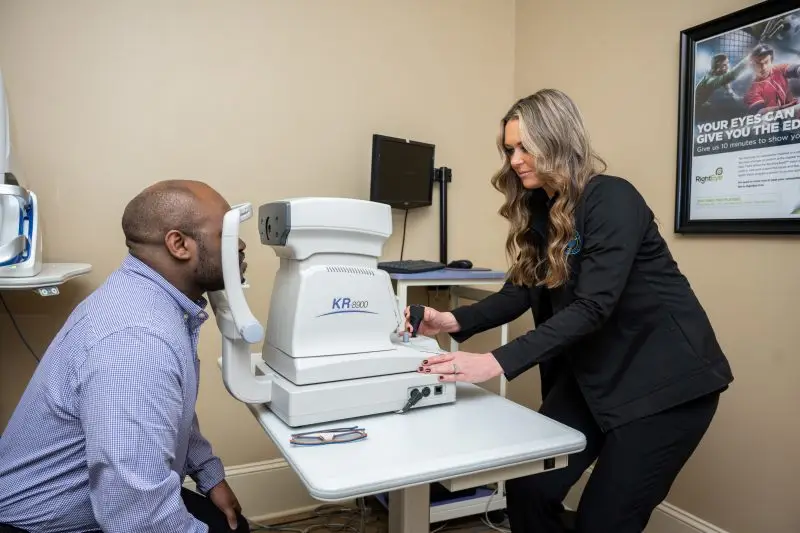
Discover your eye's unique shape and curvature through our diagnostic corneal mapping at our esteemed eye center. This precise assessment, facilitated by a corneal topographer, not only identifies conditions like astigmatism and keratoconus but also aids in determining LASIK candidacy.
OCT Scan for Retinal Insights
The OCT scan uses light waves to capture detailed images of your retina and optic nerve, which is pivotal in diagnosing and managing serious eye conditions such as macular degeneration and glaucoma.
Visual Acuity Precision Test
Our visual acuity test ensures your ability to see distant objects clearly. It is an early detection tool for vision changes, allowing for timely intervention and personalized care.
OPTOS Retinal Exam
We use advanced technology to capture a wide-field view of your retina, facilitating early detection and continuous monitoring of various eye conditions that may not be visible during a traditional eye exam.
What Our Patients Say
FOR PARENTS
Children's Vision Assessment
Take a moment to complete this short assessment so our team at Acworth Family Eyecare can better support your child's vision needs.